A 30-year pediatric nurse.
A respected colleague.
A mother of two.
No one expects a career like that to end in termination, felony charges, and jail time.
But nurse drug diversion rarely begins with criminal intent. It begins quietly — with untreated anxiety, access to medications, rationalization, and the belief that “this will be the last time.”

Chris’s story — from weekend binge drinking to fentanyl diversion while on the clock — reveals something far more important than individual failure. It exposes how healthcare systems miss warning signs, rely on trust over verification, and intervene too late.
→ If you are unsure whether your facility could detect diversion early, request a Free 30-Min Risk Assessment through our Drug Diversion Monitoring Services.
Confidential. Executive-ready insights. No obligation.
What Is Nurse Drug Diversion?
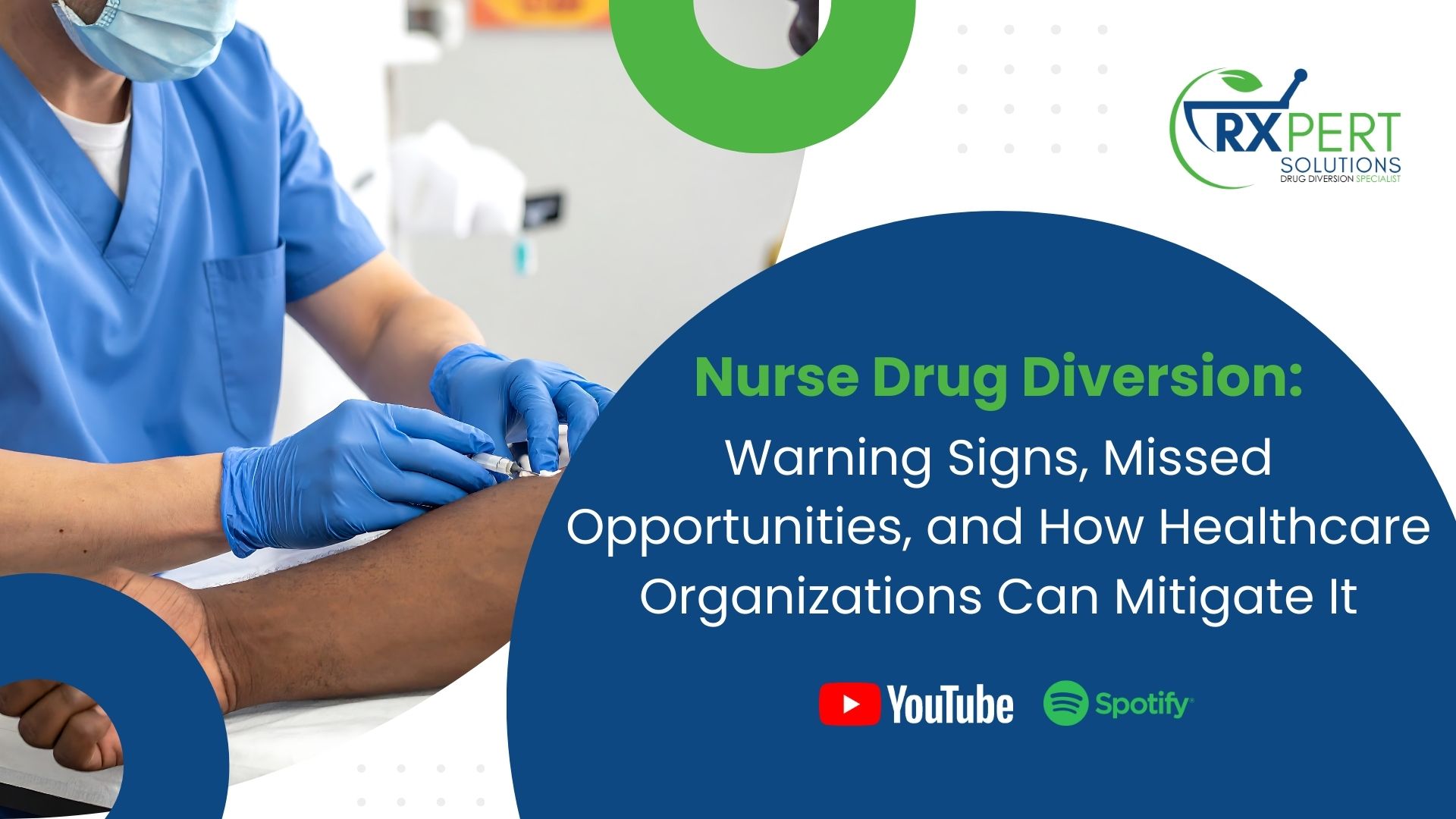
Nurse drug diversion occurs when a licensed nurse removes or misuses controlled substances from a healthcare setting for personal use or unauthorized distribution.
Diversion may involve:
- Removing unused “waste” medication
- Pulling drugs without a valid order
- Falsifying documentation
- Altering medication counts
- Self-administering narcotics during a shift
According to the National Council of State Boards of Nursing (NCSBN), approximately 10–15% of healthcare professionals may struggle with substance use during their careers.
That statistic alone makes nurse drug diversion not an anomaly — but a predictable operational risk.
Drug diversion in healthcare is:
- A patient safety threat
- A DEA enforcement exposure
- A CMS compliance vulnerability
- A Joint Commission risk factor
- A reputational liability
It is not merely a disciplinary issue. It is governance.
How Substance Abuse Among Nurses Progresses
Chris’s path did not begin in the hospital.
She used alcohol in college to cope with anxiety and depression. After a minor surgery, she was prescribed Percocet and noticed something different:
The medication reduced her anxiety without outward signs of intoxication.
Unlike alcohol:
- No smell
- No stumbling
- No visible impairment
Over time:
- She exaggerated symptoms to obtain prescriptions
- Took leftover medication from her spouse
- Began rationalizing her behavior
The turning point came when she realized unused IV medications were routinely discarded.
“They’re just throwing it away.”
That reframing — from theft to “waste” — is one of the most common psychological bridges to nurse drug diversion.
When she first used fentanyl, the intensity was immediate:
- Rapid onset
- Powerful relief
- Strong craving
The CDC continues to identify synthetic opioids like fentanyl as central drivers of the opioid crisis.
Fentanyl’s potency and short duration increase addiction risk — especially in environments where access is routine.
From that point forward, diversion escalated from occasional waste to stock removal — and eventually self-administration while caring for patients.
Each time she used, she believed it would be the last.
That cycle is consistent with substance use disorder patterns documented across healthcare populations.
Nurse Drug Diversion Warning Signs Coworkers Often Miss
One of the most important lessons from this case is that the warning signs were visible for months.
Common impaired nurse warning signs include:
Increased Break Frequency
She began leaving the unit hourly. Colleagues attributed it to smoking.
Volunteering for Narcotic Counts
She consistently offered to complete controlled substance counts.
Excessive “Waste”
Pulling fentanyl “just in case” and requesting signatures on disposal.
Documentation Irregularities
Counts that required quiet correction.
Behavioral Changes
- Irritability
- Withdrawal
- Emotional instability
Physical Symptoms
- Shaking hands
- Tremors
- Nodding off
- Needing to steady herself during IV administration
Individually, each sign had an explanation:
- Divorce stress
- Night shift fatigue
- Caffeine
Collectively, they formed a pattern.
According to the U.S. Department of Health & Human Services (HHS), healthcare organizations are expected to maintain strong controlled substance safeguards and monitoring controls.
Relying on coworkers to “notice something feels off” is not a control framework.
It is exposure.
Where Healthcare Systems Fail
In this case, the hospital relied on:
- Paper narcotic logs
- Manual counts
- Peer sign-offs
- Trust-based verification
There was no:
- Automated discrepancy tracking
- Waste frequency benchmarking
- Shift-based anomaly detection
- Role comparison analytics
Diversion thrives where oversight is fragmented.
Healthcare organizations that implement structured analytics through a formal
Controlled Substance Monitoring Program are significantly more likely to detect anomalies before patient harm or regulatory escalation occurs.
Without data, patterns remain invisible.
The Intervention That Came Too Late
When she was confronted, the room included:
- HR
- Pharmacy leadership
- Nursing administration
- Security
- Law enforcement
The focus was prosecution — not recovery.
She lost:
- Her job
- Her license
- Her insurance
- Her income
- Her professional reputation
Alternative-to-discipline programs exist in most states, allowing nurses to:
- Enter confidential treatment
- Participate in structured monitoring
- Maintain licensure under strict conditions
But neither she nor her therapist knew the program existed.
This highlights a broader problem in drug diversion in healthcare:
- Punitive response often replaces structured early detection.
- Both compliance and compassion must coexist.
Strengthen Your Diversion Controls
If your controlled substance oversight still depends on paper logs or manual reconciliation, your organization may be operating at elevated risk.
See how proactive diversion monitoring protects your staff and patients through our
Healthcare Compliance Solutions.
→ Schedule a confidential consultation today.
Fentanyl Diversion: Regulatory and Patient Safety Exposure
Fentanyl diversion carries amplified consequences.
Hospitals may face:
- DEA investigation
- CMS deficiency findings
- Joint Commission citations
- Civil litigation
- Public reporting
Patient harm risk increases if:
- Medications are diluted
- Doses are withheld
- Sterility is compromised
The reputational damage from a fentanyl diversion case often exceeds regulatory penalties.
Proactive diversion mitigation is now considered an executive-level responsibility.
Organizations implementing a structured Drug Diversion Mitigation Program reduce exposure while strengthening patient safety governance.
How Healthcare Organizations Can Mitigate Nurse Drug Diversion
Effective mitigation requires layered controls:
1. Automated Controlled Substance Monitoring
Real-time analytics identifying abnormal patterns before harm occurs.
2. Waste Trend Analysis
Monitoring frequency and peer comparisons.
3. Shift-Based Risk Modeling
Detecting anomalies tied to department or time of day.
4. Education & Culture
Training staff to recognize impaired nurse warning signs and report concerns early.
5. Structured Intervention Pathways
Clear escalation protocols involving:
- HR
- Compliance
- Pharmacy
- Legal
- Executive leadership
Diversion detection must be:
- Data-driven
- Defensible
- Consistent
- Compassionate
Trust alone is not a control.
Protect Your Patients and Your Organization
Nurse drug diversion develops gradually.
Your monitoring system should detect it just as gradually — before enforcement action occurs.
→ Get a confidential Drug Diversion Risk Analysis today.
Executive-level insights. No obligation. Designed specifically for healthcare leaders.