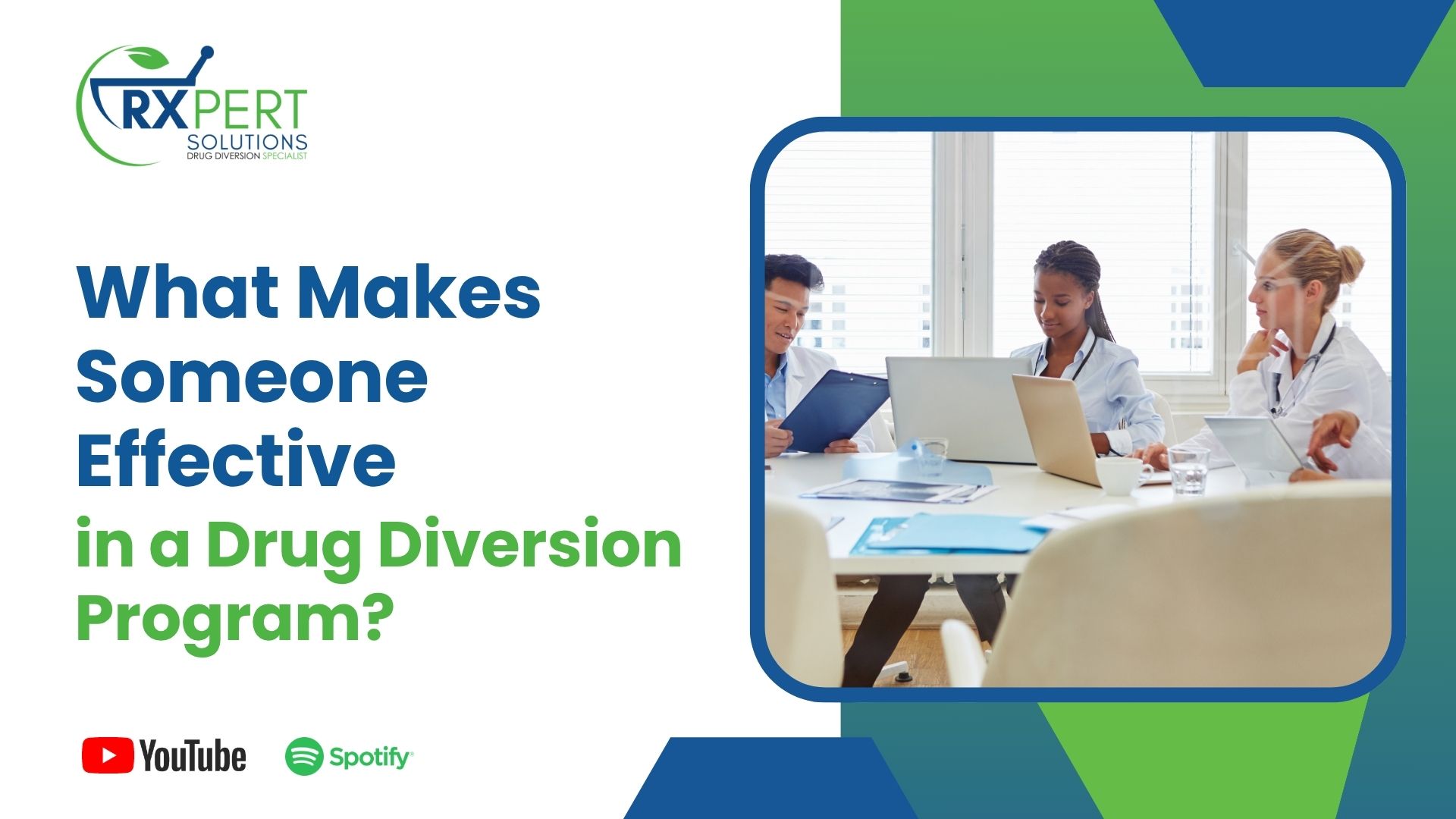
In a recent RXPERT podcast discussion, diversion mitigation leaders explored a question many healthcare organizations still wrestle with: what actually makes someone effective in a drug diversion program? The answer is bigger than a job title. Successful diversion oversight depends on clinical understanding, investigative judgment, cross-functional collaboration, and the ability to act on risk without losing sight of patient safety.
If your organization has not recently evaluated whether its current approach truly supports diversion mitigation, now is the time.
→ Request a Free 30-Minute Drug Diversion Risk Assessment

Drug diversion mitigation is often framed as a question of background: should the program be led by pharmacy, nursing, or someone else? In reality, that is usually the wrong starting point. Diversion risk touches medication ordering, dispensing, administration, storage, documentation, compliance, and follow-up. No single discipline sees the entire picture on its own.
The ASHP Guidelines on Preventing Diversion of Controlled Substances support an interdisciplinary approach, while the DEA’s reporting requirements reinforce the need for accountability, documentation, and timely escalation.
The most effective diversion leaders bring more than credentials
A clinical background matters, but credentials alone do not make a program effective. Strong diversion leaders usually combine technical knowledge with the ability to investigate, communicate, and influence action.
The most important traits often include:
- attention to detail
- curiosity and persistence
- comfort with ambiguity
- strong documentation habits
- the ability to ask difficult follow-up questions
- confidence in high-stakes conversations
- empathy without losing objectivity
- the discipline to present findings clearly across departments
That combination is what helps a leader move from spotting anomalies to strengthening systems.
What nursing often contributes to diversion oversight
Nursing experience can be especially valuable because it brings direct awareness of frontline care delivery. Nurses often understand how medication administration happens under pressure, what normal workflow looks like on a unit, and when something feels off even before the data tells the full story.
That perspective can help identify:
- unusual behavior changes
- workflow inconsistencies
- documentation patterns that do not match clinical reality
- workarounds that increase diversion risk
- subtle patient care concerns that deserve follow-up
The CDC’s clinical overview of drug diversion also underscores how diversion can create serious patient safety concerns, especially when tampering is involved.
What pharmacy often contributes
Pharmacy brings a different but equally important perspective. A strong pharmacy-based leader may be especially equipped to evaluate therapeutic appropriateness, medication movement, controlled substance handling, inventory controls, wholesaler ordering, sterile compounding workflows, and regulatory recordkeeping.
That expertise supports stronger oversight in areas such as:
- controlled substance receiving and storage
- medication movement through the pharmacy
- dispensing and documentation patterns
- sterile compounding risk points
- ordering, inventory, and recordkeeping controls
- broader controlled substance compliance issues
The Joint Commission’s medication security expectations reinforce the importance of secure medication handling across care settings.
Hospitals that want to reduce controlled substance risk should not wait until an investigation forces action. → Explore On-Site Drug Diversion Risk Assessment Service
The best programs are collaborative by design
The strongest diversion mitigation programs are not built around one profession working in isolation. They work best when pharmacy, nursing, compliance, HR, leadership, analytics, and security all have a role in evaluating risk and supporting response.
That matters because diversion oversight is not just about identifying suspicious behavior. It also involves:
- interpreting data in context
- communicating findings clearly
- documenting recommendations
- escalating appropriately
- protecting objectivity
- maintaining trust across teams
For organizations building a more structured process, see Phases of a Diversion Investigation.
Communication is one of the most overlooked skills in diversion work
Diversion data is often complex. Reports may include discrepancy trends, override activity, wasting records, medication movement, administration history, and workflow anomalies. Not everyone reviewing that information will interpret it the same way.
That is why effective leaders do more than gather data. They translate it. They explain what the findings mean in clinical and operational terms, make the risk understandable to non-clinical stakeholders, and keep the focus on safety rather than blame.
This is often what separates a reactive program from a credible one.
What healthcare organizations should evaluate now
Healthcare organizations looking to strengthen diversion mitigation should ask:
- Do we have the right mix of clinical, operational, and analytical expertise?
- Can our leaders explain risk clearly to both clinical and non-clinical audiences?
- Are our workflows and controls aligned across departments?
- Do we have a structured response process, or are we reacting case by case?
- Are we relying too heavily on credentials instead of capabilities?
Every healthcare organization needs a clear diversion mitigation strategy. Independent evaluations can identify monitoring gaps before they become compliance issues. → Speak With a Diversion Mitigation Specialist
Final takeaway
The most effective person to help lead a drug diversion program is not automatically the one with a specific license. It is the person, or ideally the team, with the right blend of clinical understanding, investigative discipline, operational awareness, communication skill, and follow-through.
That is the real takeaway from the RXPERT podcast discussion: strong diversion mitigation is not profession versus profession. It is coordinated expertise working toward the same goal.
Diversion often hides in complex medication data. Advanced analytics can identify patterns that manual audits miss. → See How Rxpert Solutions Strengthens Drug Diversion Mitigation Programs
Frequently Asked Questions
This article was inspired by a recent Drug Diversion Insights podcast hosted by Terri Vidals, PharmD, featuring Bethany Gamble, PharmD, Mary Nelson, RN, and Alicia Pitman, RN.
Start with a clear diversion risk picture.
If your organization hasn’t conducted a recent diversion risk review, now is the time.
→ Request a Free 30-Minute Drug Diversion Risk Assessment