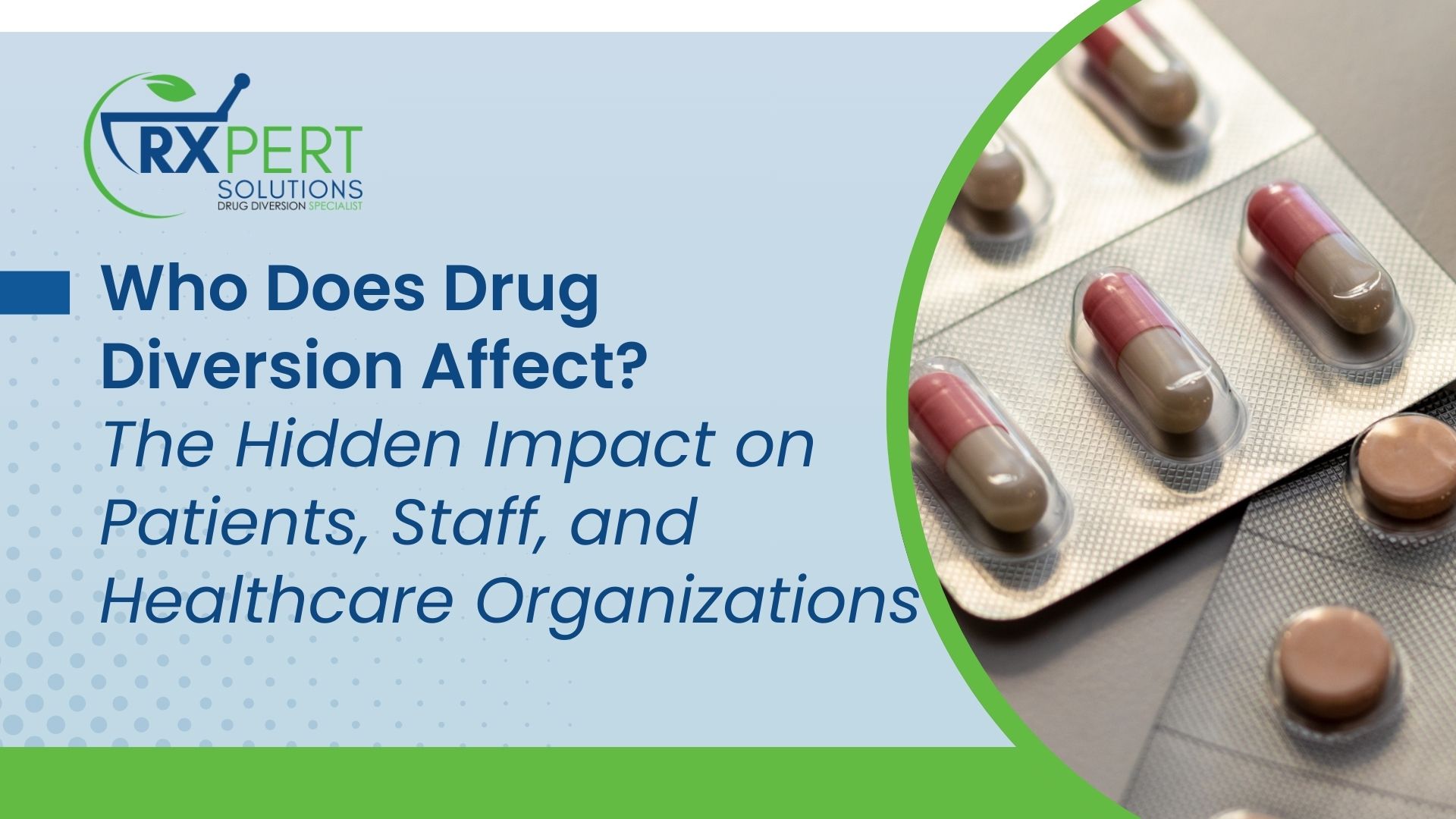
Drug diversion is not a victimless crime — and understanding who does drug diversion affect is critical for healthcare leaders responsible for patient safety and regulatory compliance.
In a healthcare facility, drug diversion affects patients, clinicians, hospitals, regulatory standing, and even the diverted employee struggling with addiction. The consequences extend far beyond missing medications — they create patient harm, legal exposure, financial penalties, and reputational damage.
If your organization hasn’t conducted a recent diversion risk review, now is the time.
→ Request a Free 30-Minute Risk Assessment
Who Does Drug Diversion Affect in a Healthcare Facility?
When controlled substances are diverted, the ripple effects impact multiple layers of the organization.
1. Patients
Patients are often the first and most vulnerable victims.
According to CDC investigations into drug diversion–related outbreaks, tampering and substitution have resulted in serious healthcare-associated infections and patient harm:
Drug diversion can lead to:
- Untreated or under-treated pain
- Exposure to contaminated medications
- Infection outbreaks
- Delayed recovery
- Increased length of stay
When a diverted narcotic is replaced with saline or another substance, patients suffer clinically — and facilities face severe liability exposure.
2. Healthcare Staff
Healthcare professionals struggling with substance use disorder are often victims of addiction and drug diversion themselves. Many diversion cases begin with untreated stress, burnout, or unmanaged access controls.
Impacts on staff include:
- Loss of professional license
- Criminal prosecution
- Termination
- Reputational harm
- Mental health crisis
A structured monitoring and early intervention program protects both the employee and the organization.
3. Hospitals & Health Systems
From a systems perspective, drug diversion consequences can be devastating:
- DEA fines for controlled substance violations
- CMS citation risks under Conditions of Participation
- Joint Commission accreditation findings
- Civil malpractice litigation
- Whistleblower lawsuits
- Reputational damage
Understanding who does drug diversion affect means recognizing that leadership is ultimately accountable.
Drug Diversion Consequences for Healthcare Organizations
Failing to detect and report diversion carries significant penalties.
Under DEA reporting requirements for significant loss or theft of controlled substances (21 CFR §1301.76), registrants must report diversion promptly:
https://www.deadiversion.usdoj.gov/21cfr/cfr/1301/1301_76.htm
Facilities must also submit DEA Form 106 when significant loss occurs.
Failure to comply can result in:
- Six-figure federal fines
- Corrective action plans
- Increased audit scrutiny
- Criminal investigation
Hospitals are also subject to CMS Conditions of Participation for hospitals, which require safe medication management and patient protection:
Additionally, organizations may face enforcement action from the HHS Office of Inspector General (OIG).
Drug diversion consequences extend beyond regulatory penalties. Civil claims may include:
- Negligence
- Corporate liability
- Failure to supervise
- False Claims Act violations
Hospitals that delay reporting often face harsher regulatory responses.
Victims of Addiction and Drug Diversion: Early Detection and Support
A compliance-forward organization must also implement support systems for early-stage addiction.
Common early indicators include:
- Excessive wasting patterns
- Frequent overrides
- Documentation inconsistencies
- Isolation behavior
- Volunteering for extra narcotic access shifts
Facilities should implement:
- Anonymous peer reporting systems
- Structured early intervention protocols
- Employee Assistance Programs (EAP)
- Behavioral health referral partnerships
- Monitored return-to-work agreements
When healthcare facilities ignore early warning signs, both patient harm and employee deterioration escalate.
Screening and Monitoring Tools Healthcare Facilities Should Implement
If you’re asking who does drug diversion affect, the next question should be: How do we mitigate it?
Modern diversion mitigation requires automation, not manual audits.
Healthcare facilities should implement:
1. Automated Controlled Substance Reconciliation
Matches dispensing, administration, wasting, and inventory logs.
2. Real-Time Diversion Analytics Dashboards
Flags anomalies immediately instead of months later.
3. Audit Trail Monitoring
Tracks override frequency, canceled transactions, and access irregularities.
4. AI-Based Pattern Detection
Identifies subtle behavioral trends linked to early addiction stages.
5. Centralized Compliance Reporting Logs
Ensures DEA and state board documentation is audit-ready.
Accreditation bodies such as the Joint Commission medication management standards emphasize safe handling and documentation of controlled substances.
→ Get a Drug Diversion Compliance Quote
Rxpert Solutions specializes in designing and implementing comprehensive diversion mitigation programs tailored for healthcare systems.
What Happens If a Facility Fails to Report Drug Diversion?
Failure to report can result in:
- DEA enforcement action
- Mandatory disclosure investigations
- CMS reimbursement jeopardy
- Board of Pharmacy sanctions
- Criminal liability in severe cases
In whistleblower situations, failure to report can trigger False Claims Act exposure — dramatically increasing financial risk.
Healthcare organizations must maintain clear reporting workflows, documentation trails, and executive oversight.
How Rxpert Solutions Helps Mitigate Drug Diversion Risk
At Rxpert Solutions, we help healthcare organizations answer the critical question: who does drug diversion affect — and how do we mitigate it?
Our services include:
- Comprehensive diversion risk assessments
- Policy and compliance gap analysis
- Monitoring system implementation
- Audit-ready documentation frameworks
- Staff education and leadership training
- Regulatory response preparation
We focus exclusively on healthcare compliance, ensuring your systems align with DEA, CMS, and accreditation standards.
✔ Confidential
✔ Healthcare-specific
✔ Compliance-driven
✔ Designed to reduce regulatory exposure
→ Schedule Your Confidential Drug Diversion Review